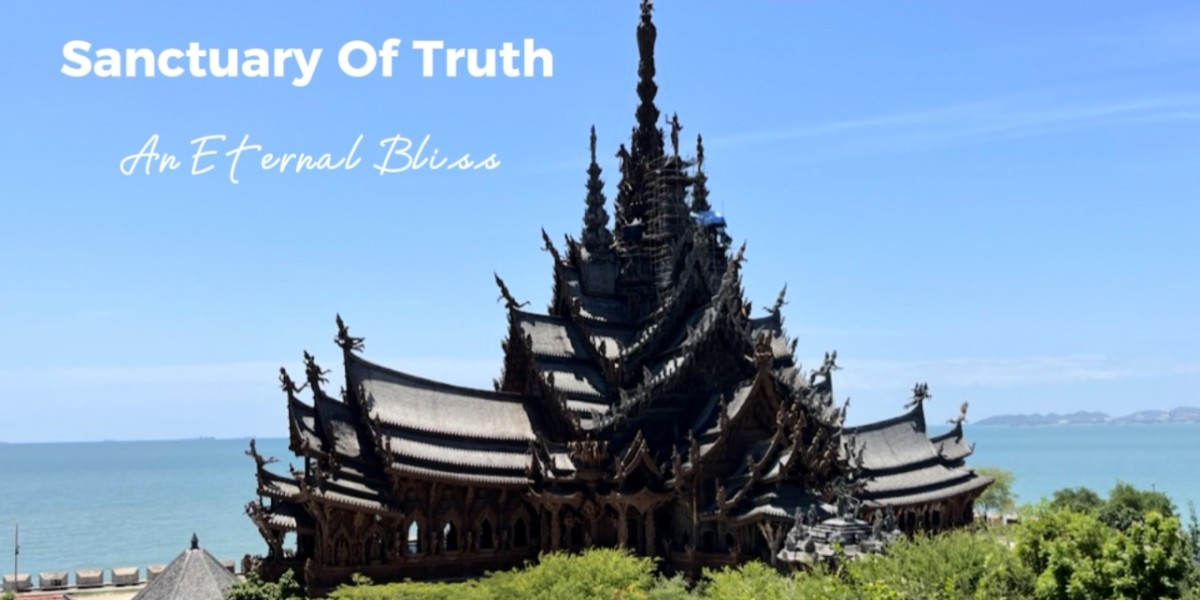

Rising majestically along the shores of Pattaya, the Sanctuary of Truth is not just a structure—it’s an ongoing philosophical journey carved entirely in wood. Unlike typical tourist attractions defined by quick visits and photo opportunities, this awe-inspiring monument invites visitors to slow down, reflect, and engage with deeper questions about life, spirituality, and human existence.
At first glance, the Sanctuary of Truth looks like a traditional Thai temple. Its towering spires, intricate carvings, and grand scale immediately evoke a sense of reverence. However, what makes it truly unique is that it is constructed entirely from wood, without the use of metal nails. Instead, traditional woodworking techniques such as interlocking joints and wooden pegs hold the massive structure together. This commitment to ancient craftsmanship is a testament to the builders’ dedication to preserving traditional knowledge in a rapidly modernizing world.
Construction of the Sanctuary began in 1981 under the vision of Thai businessman Lek Viriyaphan, who was also behind other cultural landmarks in Thailand. His goal was not merely to create a visually stunning building but to establish a place that reflects the philosophical and religious traditions of Eastern thought. Even today, the Sanctuary remains unfinished, with artisans continuously working on new carvings and sections. This ongoing construction symbolizes the idea that truth and knowledge are never complete—they evolve.
As you step inside, the scale and detail of the carvings become even more impressive. Every inch of the Sanctuary is covered in intricate woodwork, depicting scenes from Hindu and Buddhist mythology. Carved figures of gods, goddesses, celestial beings, and mythological creatures seem to come alive in the interplay of light and shadow. Each carving tells a story, and collectively, they form a visual narrative about the universe, human nature, and the interconnectedness of all things.
The Sanctuary is divided into four main wings, each representing different philosophical and cultural influences: Thai, Khmer, Chinese, and Indian. These sections highlight how various Asian traditions approach similar questions about life and existence. Despite their differences, they share common themes—respect for nature, the importance of morality, and the pursuit of inner peace.
One of the central ideas conveyed by the Sanctuary is the relationship between humans and the universe. The carvings emphasize that humanity is not separate from nature but deeply connected to it. In a world increasingly dominated by technology and material pursuits, this message feels particularly relevant. The Sanctuary encourages visitors to reflect on their role in the world and to consider how their actions impact the environment and society.
Another prominent theme is the concept of impermanence. In Buddhist philosophy, everything is transient, and clinging to material possessions or the ego leads to suffering. The fact that the Sanctuary is made entirely of wood—a material that naturally ages and requires constant maintenance—serves as a powerful metaphor for this idea. The ongoing repairs and additions are not seen as flaws but as part of the structure’s life cycle.
Visitors to the Sanctuary of Truth often describe the experience as both humbling and inspiring. Walking through its विशाल halls, you can hear the rhythmic sounds of chisels and hammers as craftsmen continue their work. This living aspect of the monument sets it apart from static historical sites. Here, tradition is not preserved behind glass—it is actively practiced and passed down through generations.
Beyond its philosophical depth, the Sanctuary also offers a variety of cultural activities. Visitors can watch woodcarving demonstrations, take guided tours to better understand the symbolism behind the artwork, and even enjoy traditional Thai performances. The surrounding area includes gardens and scenic viewpoints, providing a peaceful environment to relax and absorb the experience.
For photographers and architecture enthusiasts, the Sanctuary is a dream destination. The interplay of natural light with the warm tones of the wood creates a constantly changing visual landscape. Every angle reveals new details, making it impossible to capture the entire essence in just a few photos. Sunrise and sunset are particularly magical times to visit, as the golden light enhances the intricate carvings.
However, the true value of the Sanctuary lies not in its visual appeal but in its message. In a fast-paced world where convenience often takes precedence over meaning, the Sanctuary of Truth stands as a reminder to seek deeper understanding. It challenges visitors to look beyond surface-level experiences and to engage with the fundamental questions of life: Who are we? Why are we here? What is our relationship with the world around us?
Planning a visit to the Sanctuary of Truth is relatively straightforward. It is located in Pattaya, a popular coastal city in Thailand, making it easily accessible for both domestic and international travelers. The site is open daily, and guided tours are available in multiple languages. While there is an entrance fee, many visitors find the experience well worth the cost, given the uniqueness and depth of what the Sanctuary offers.
It’s also important to note that, as a place inspired by spiritual traditions, modest dress is recommended when visiting. Comfortable footwear is advisable as well, since exploring the site involves a fair amount of walking. Taking your time is key—this is not a place to rush through.
In conclusion, the Sanctuary of Truth is far more than a tourist attraction. It is a living masterpiece that blends art, architecture, philosophy, and spirituality into a single, immersive experience. Whether you are drawn by its stunning craftsmanship, its cultural significance, or its profound messages, a visit to the Sanctuary is likely to leave a lasting impression.
In a world where many destinations are designed for instant gratification, the Sanctuary of Truth offers something rare: an opportunity to pause, reflect, and connect with something deeper. It reminds us that while technology and progress shape our lives, the search for truth and meaning remains timeless.
FAQs
Q1.Where is the Sanctuary of Truth located?
The Sanctuary of Truth is located in Pattaya, Thailand, along the coastline of the Gulf of Thailand. It’s easily accessible from Bangkok, making it a popular day-trip destination.
Q2. Why is the Sanctuary of Truth made entirely of wood?
The structure is built completely from wood to preserve traditional Thai craftsmanship and symbolize the connection between humans and nature. No metal nails are used—only ancient woodworking techniques like wooden joints and pegs.
Q3. Is the Sanctuary of Truth still under construction?
Yes, construction began in 1981 and continues to this day. The ongoing work represents the idea that truth, knowledge, and human understanding are always evolving.
Q4. What is the main purpose of the Sanctuary of Truth?
The Sanctuary is designed as a philosophical and spiritual space that reflects Eastern beliefs, including Hinduism and Buddhism. It encourages visitors to reflect on life, morality, and the relationship between humans and the universe.
Q5. What should visitors wear and expect during their visit?
Visitors should dress modestly, as it is a culturally and spiritually significant site. Comfortable shoes are recommended since there is a lot of walking. Guided tours are available to help understand the detailed carvings and symbolism.
Visit - Sanctuary of Truth