

Starting a business is an exciting journey, and one of the first crucial steps is company registration. Whether you're launching a startup or formalizing an existing business, registering your company gives it a legal identity and unlocks numerous benefits.
What is Company Registration?
Company registration is the process of legally incorporating your business with the government. Once registered, your business becomes a separate legal entity, distinct from its owners. This means the company can own assets, incur liabilities, and enter into contracts in its own name.
Why is Company Registration Important?
Registering your company offers several advantages:
Legal Recognition: Your business becomes officially recognized by law.
Limited Liability: Protects personal assets from business debts (in certain structures).
Credibility: Builds trust with customers, investors, and partners.
Access to Funding: Easier to raise capital from banks and investors.
Tax Benefits: Eligible for various deductions and incentives.
Types of Company Structures
Before registering, it's important to choose the right structure for your business:
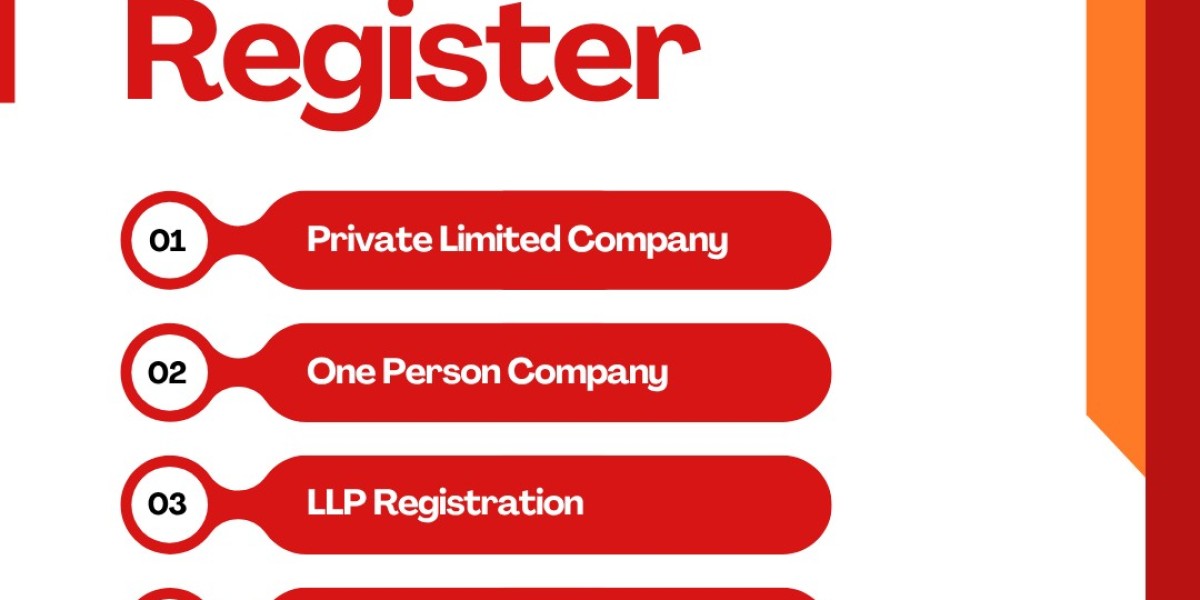
1. Private Limited Company
Most popular structure for startups
Limited liability for shareholders
Separate legal entity
2. Limited Liability Partnership (LLP)
Combines benefits of partnership and company
Less compliance compared to private limited companies
3. One Person Company (OPC)
Suitable for solo entrepreneurs
Single owner with limited liability
4. Sole Proprietorship
Owned and managed by one person
Easy to start but offers no liability protection
Steps for Company Registration
Here’s a simplified step-by-step process:
Step 1: Choose a Company Name
Select a unique name that complies with government guidelines and is not already registered.
Step 2: Obtain Digital Signature Certificate (DSC)
Required for filing electronic documents securely.
Step 3: Apply for Director Identification Number (DIN)
Mandatory for individuals who wish to become directors of the company.
Step 4: File Incorporation Documents
Submit necessary documents such as:
Memorandum of Association (MOA)
Articles of Association (AOA)
Proof of address and identity
Step 5: Get Certificate of Incorporation
Once approved, you will receive a certificate confirming your company’s legal existence.
Documents Required
Typically, you will need:
PAN Card and ID proof of directors
Address proof of business location
Passport-size photographs
Bank statements or utility bills
Common Mistakes to Avoid
Choosing a name that is already taken
Submitting incorrect or incomplete documents
Ignoring compliance requirements after registration
Selecting the wrong business structure
Post-Registration Compliance
After registration, companies must comply with ongoing legal requirements such as:
Filing annual returns
Maintaining financial records
Paying taxes on time
Conducting board meetings (if applicable)
Conclusion
Company registration is the foundation of a legally compliant and scalable business. While the process may seem complex at first, understanding the steps and requirements can make it much easier. With the right planning and guidance, you can successfully register your company and set the stage for long-term growth.
If you're planning to start your own business, now is the perfect time to take the first step toward turning your idea into a registered enterprise.