
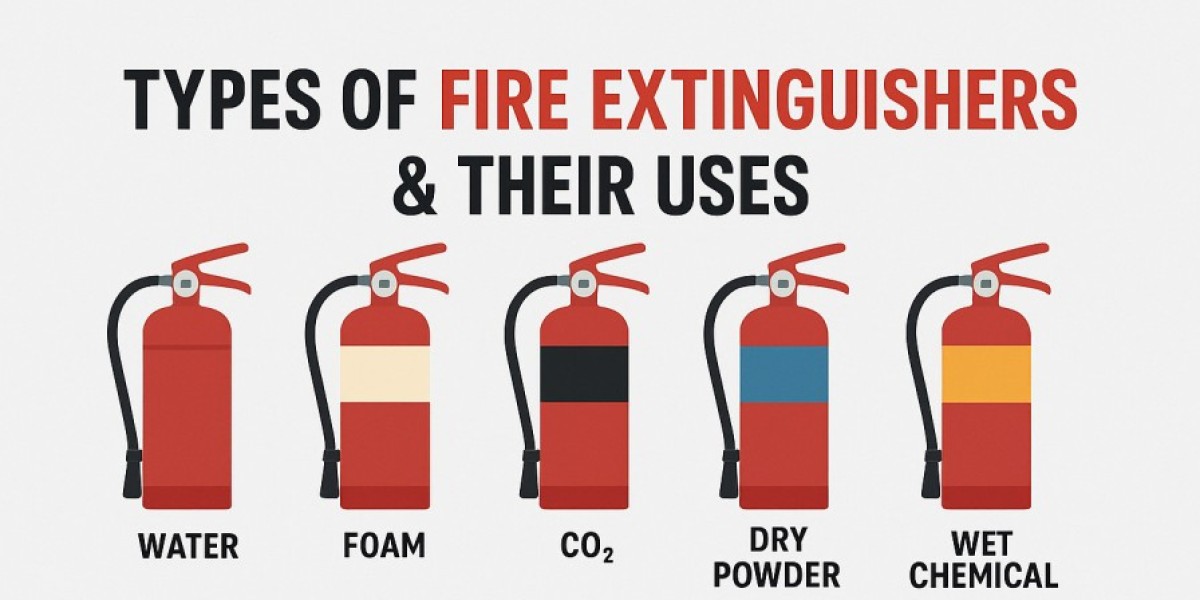

Fire extinguishers are the first line of defense against small fires. When used correctly and at the right time, they can prevent major property damage, business downtime, and even loss of life. However, not all fire extinguishers are the same. Each type is designed for specific fire classes and environments.
In this guide, we’ll explain the different types of fire extinguishers, their uses, and where each one is required, helping you stay safe, compliant, and prepared.
Why Understanding Fire Extinguisher Types Matters
Using the wrong fire extinguisher can be dangerous. For example, spraying water on an electrical fire can lead to electrocution, while using the wrong agent on a flammable liquid fire can cause it to spread.
Knowing the correct type ensures Faster fire control, Reduced risk to people, Compliance with fire safety regulations and Protection of equipment and property.
Fire Classes Explained
Before choosing an extinguisher, it’s important to understand classes of fire:
- Class A – Ordinary combustibles (wood, paper, cloth, rubber)
- Class B – Flammable liquids (petrol, diesel, oil, paints)
- Class C – Flammable gases (LPG, CNG, propane)
- Class D – Combustible metals (magnesium, sodium, aluminum powder)
- Class K – Cooking oils and fats (commercial kitchens)
- Electrical Fires – Fires involving live electrical equipment
Types of Fire Extinguishers, Their Uses & Required Locations.
1. Water Fire Extinguisher
Best for: Class A fires
How it works: Cools the burning material and removes heat
Where required:
- Offices
- Schools
- Warehouses
- Paper storage areas
⚠️ Not suitable for electrical or flammable liquid fires.
2. Foam Fire Extinguisher
Best for: Class A and Class B fires
How it works: Forms a blanket over flammable liquids to prevent re-ignition
Where required:
- Petrol pumps
- Paint shops
- Chemical storage areas
- Workshops
✔ Effective for liquid fires where water alone is unsafe.
3. ABC Fire Extinguisher (Dry Powder)
Best for: Class A, B, C & electrical fires
How it works: Interrupts the chemical reaction of fire
Where required:
- Commercial buildings
- Factories
- Parking areas
- Electrical rooms
- Residential apartments
✔ One of the most versatile and commonly used fire extinguishers.
4. CO₂ (Carbon Dioxide) Fire Extinguisher
Best for: Electrical and Class B fires
How it works: Displaces oxygen and suffocates the fire
Where required:
- Server rooms
- Electrical panels
- Control rooms
- Laboratories
✔ Leaves no residue, making it ideal for sensitive equipment.
5. Clean Agent Fire Extinguisher
Best for: Electrical and Class B fires
How it works: Absorbs heat without damaging equipment
Where required:
- Data centers
- Hospitals
- Telecommunication rooms
- Museums
✔ Safe for electronics and enclosed spaces.
6. Wet Chemical Fire Extinguisher
Best for: Class K fires
How it works: Cools and reacts with hot oils to form a soapy layer
Where required:
- Commercial kitchens
- Restaurants
- Hotels
- Food processing units
✔ Essential for deep-fat fryers and high-temperature cooking oil fires.
Correct Placement of Fire Extinguishers
Proper placement is as important as choosing the right type. Fire extinguishers should:
- Be easily accessible
- Be mounted at visible locations
- Be placed near fire-risk areas
- Have clear signage
Common placement guidelines:
- Offices: Near exits and corridors
- Kitchens: Away from stoves but within reach
- Factories: Near machinery and fuel storage
- Electrical rooms: Outside the room entrance
Maintenance and Compliance
Fire extinguishers must be:
- Inspected monthly
- Serviced annually by certified professionals
- Refilled after use or expiry
- Compliant with IS standards and local fire safety norms
Regular maintenance ensures the extinguisher works when seconds matter.
Final Thoughts
Understanding fire extinguisher types, uses, and placement is critical for effective fire safety planning. Whether it’s a home, office, factory, or commercial kitchen, having the right extinguisher in the right place can prevent a minor fire from turning into a major disaster.
Fire safety is not just about compliance—it’s about preparedness, protection, and peace of mind.